
The India-US ties witnessed a major downturn after President Trump slapped a whopping 50 per cent tariff on Indian goods, including a 25 per cent punitive levy over Russian oil purchases.
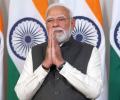
Modi's remarks came hours after the US and India agreed on a trade deal under which Washington will bring down reciprocal tariff on Indian goods to 18 per cent from current 25 per cent.
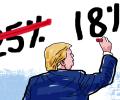
The Congress party has criticized the Indo-US trade agreement, calling it a 'surrender' of India's self-esteem and interests, and a betrayal of Indian farmers and MSMEs.

The Congress attacked the Modi government, saying it now seems to be routine that India learns about its government's actions only from Trump or his appointees.

European Commission President Ursula von der Leyen says India and the EU are close to a 'historic trade agreement' that could create a market of two billion people and account for almost a quarter of the global GDP.

The India-US trade deal has offered a much-needed breather for the Indian information technology (IT) industry, which has been grappling with global macroeconomic uncertainty and subdued client spending over the past few years.

Trump repeated the assertion that Sharif had claimed he saved "25 million lives" when he stopped the war between India and Pakistan.

China's Foreign Ministry has refuted allegations of providing military support to Iran, warning the US against imposing tariffs based on these accusations. The statement follows reports of Iran acquiring a Chinese satellite for targeting US military bases. Meanwhile, a rescheduled meeting between Presidents Trump and Xi Jinping is set for May.

Canadian Prime Minister Mark Carney on Tuesday warned that the world is witnessing a fundamental 'rupture' in the global order rather than a gradual transition, cautioning against weaponising trade, finance, and supply chains.

'At the first sign of real trouble, that money will move. There will be a run.'

China has denied any links to the Iranian cargo ship seized by the US in the Gulf, which allegedly contained chemical materials for manufacturing missiles. The denial follows allegations by former US envoy to the UN Nikki Haley, who claimed the ship was headed from China to Iran.

Apple CEO Tim Cook's strategic pivot, from initial rejections to local partnerships and leveraging government policies like PLI, transformed India into a major iPhone manufacturing and export hub, now accounting for one in every four iPhones assembled globally.

'This has translated into a combined daily loss of 60 crore in revenues for exporters in Tiruppur, Coimbatore, Erode and Karur districts, pushing many small and medium enterprises to the brink of collapse.'

US President Donald Trump's call to Prime Minister Narendra Modi signals a concerted effort to reset strained Washington-New Delhi ties, with a focus on 'big-ticket' energy and trade deals, including increased Indian imports of US LNG and LPG, and potential cooperation on small modular reactors.

Indian benchmark equity indices, Sensex and Nifty, snapped a three-day rally, tumbling nearly 1 per cent due to heavy selling in IT stocks, a jump in crude oil prices, foreign fund outflows, and fears of prolonged instability in West Asia.

Tata Steel reported a significant 124.9 per cent year-on-year increase in consolidated net profit to 2,925.74 crore for the fourth quarter of FY26, driven by higher volumes and an improved product mix in India, alongside planned cost reductions across its global operations.

After three consecutive months of heavy selling, foreign portfolio investors (FPIs) turned net buyers in the first week of February, infusing more than Rs 8,100 crore in Indian equities, aided by improving risk sentiment, along with a trade deal with the US.
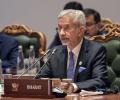
India has expressed serious concerns about the West Asia crisis and its potential impact on energy supplies and maritime stability, urging BRICS nations to find practical solutions to geopolitical challenges and unilateral sanctions.

Representatives Deborah Ross of North Carolina, Marc Veasey of Texas and Raja Krishnamoorthi of Illinois introduced the resolution on Friday in the House of Representatives to terminate Trump's national emergency authorising tariffs of up to 50 per cent on imports from India, helping to restore Congress' constitutional authority over trade.
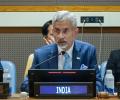
External Affairs Minister S Jaishankar has called on Brazil, Russia, India, China, South Africa (BRICS) to defend the multilateral trading system amid increasing protectionism and tariff volatility during a meeting of the bloc's foreign ministers in New York on the sidelines of the United Nations General Assembly session.

Talks on the proposed trade deal between India and the United States will resume after the year-end holidays, coinciding with Sergio Gor -- a close aide of American President Donald Trump -- taking charge as the US Ambassador to India in early January, according to a person privy to the development.
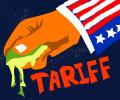
A trade deal makes sense only if it is fair and reciprocal. If the cost is strategic dependence or loss of policy space, waiting is the wiser option, asserts Ajay Srivastava.

India is evaluating its involvement in the Chabahar port project in Iran due to potential US tariffs. The US had granted India a waiver for the project, but it expires soon. India is exploring options to continue supporting the port's development while minimizing exposure to US sanctions.

The Indian rupee depreciated by 32 paise to close at 92.83 against the US dollar, influenced by escalating global tensions, particularly the US-Iran conflict, and the deadline for the RBI's instructions to banks to curb overnight positions.
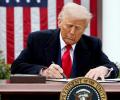
President Donald Trump on Friday signed an executive order retroactively lowering tariffs on a range of agricultural imports, including beef, tomatoes, coffee and bananas, with the change taking effect from November 20, CNN reported.

HCL Technologies remains under pressure after missing Q4 expectations and issuing cautious FY27 guidance. Analysts highlight weak margins, soft demand, and muted growth outlook.
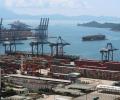
With the Iran war escalating sharply and crisis deepening in the global energy market, India on Monday unveiled a coordinated plan to support exporters and shippers caught in the fallout.
Several farmer organisations in India are protesting the proposed India-US trade deal, expressing concerns about its impact on the agriculture sector and demanding the resignation of the Commerce Minister.

Prime Minister Narendra Modi on Tuesday announced the signing of the India-EU Free Trade Agreement (FTA), saying it accounts for 25 per cent of global GDP and one-third of global trade.

'FPIs are unlikely to return unless there is equilibrium between valuation premium and earnings growth.'

'Engaged in very fruitful discussions to expand our trade and economic partnership.'
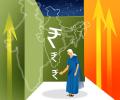
The World Bank has affirmed India's strong position to withstand the current global energy shock, citing high foreign exchange reserves, fiscal space, and low inflation as key buffers supporting continued growth despite international headwinds.
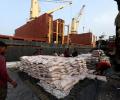
The Federation of Indian Export Organisations (FIEO) has appealed to the Reserve Bank of India (RBI) for liquidity support to Indian exporters, citing a significant increase in freight costs and extended payment cycles due to the ongoing West Asia conflict.

The Confederation of Indian Industry (CII) has proposed a 20-point policy agenda to the finance ministry, including a conflict-linked emergency credit line guarantee scheme and tax rationalisation on energy inputs, to support MSMEs, exporters, and energy-intensive industries affected by the ongoing West Asia war.

The Indian rupee depreciated by 52 paise to settle at 93.35 against the US dollar, driven by failed US-Iran peace talks, surging crude oil prices due to a potential US blockade of Iranian ports, and a global flight to the greenback. This geopolitical uncertainty is also leading to foreign capital withdrawal from domestic equities.

India should not stay on the margins of this initiative. There should be a serious debate about what would be in India's best interests asserts former foreign secretary Shyam Saran.

India and the European Union are set to announce on January 27 the conclusion of negotiations and finalisation of a free trade agreement, which is aimed at boosting economic ties between the two regions amid disruptions in global trade due to US tariffs, an official said.

The Indian government has imposed import restrictions on all forms of gold, silver, and platinum articles to prevent misuse of free trade agreements (FTAs). The restrictions apply immediately, regardless of prior contracts or commitments.
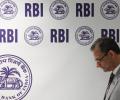
Uncertainties stemming from the West Asia crisis and its potential impact on inflation and economic growth were key factors in the Reserve Bank of India's Monetary Policy Committee (MPC) decision to maintain the status quo on interest rates, according to the recently released MPC meeting minutes.

In the 15 Union Budget presentation days of the Narendra Modi government since it came to power in 2014, the BSE benchmark Sensex has ended in negative territory eight times.
 © 2026 Rediff.com - Advertise with us - Disclaimer - Privacy Policy - Sitemap - Feedback - About us - Terms of use - Grievances